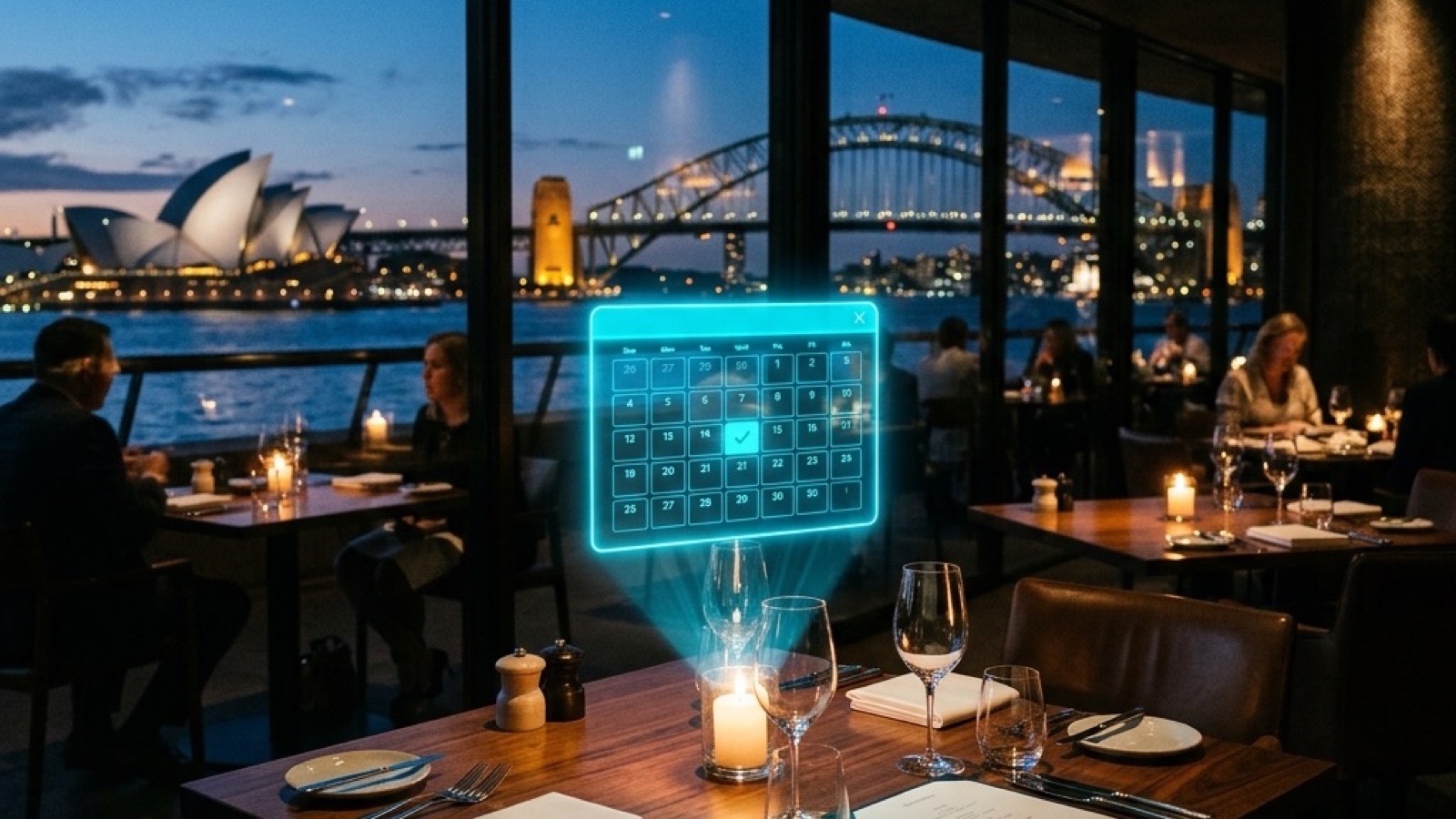
Sydney has over 15,000 restaurants, cafes, and bars competing for the same diners. Rising food costs, crippling rent increases, and a hospitality staffing crisis that shows no sign of easing mean that filling tables has never been harder — or more expensive. But a growing number of Sydney venues are quietly using AI-powered marketing to do what used to require a full marketing team: attract new customers, bring back regulars, and keep every seat filled without adding a single hour to anyone's workload.
This is not science fiction. It is not about robots in the kitchen or replacing your front-of-house team. It is about practical, affordable AI tools that handle the repetitive marketing tasks that most restaurant owners know they should be doing but never have time for. Let us walk through exactly what is working in Sydney right now and how you can start implementing it this week.
The Restaurant Marketing Problem in 2026
If you run a restaurant in Sydney, you already know the numbers are brutal. Average commercial rents across the Inner West and Eastern Suburbs have risen 18% since 2024. Wholesale food costs are up 12%. And finding reliable kitchen and floor staff remains the single biggest operational headache for venues of every size.
Marketing sits in an uncomfortable position. Every restaurant owner knows they need it. Google Business, social media, email campaigns, review management, phone enquiries — the list of things you should be doing grows every year. But when you are already stretched thin running service, managing suppliers, and covering shifts because someone called in sick, marketing is the first thing that drops off the list.
The result is predictable: inconsistent social media posting, dozens of unanswered Google reviews, missed phone calls during peak service, and a database of customer emails that has never been used. Every one of those gaps is a missed opportunity to fill a table.
This is exactly where AI changes the equation. Not by adding more to your plate, but by taking the repetitive marketing tasks off it entirely.
How AI Changes the Game for Restaurants
When most people hear "AI marketing," they picture something complicated and expensive. The reality in 2026 is far more practical. AI marketing tools for restaurants are designed to do specific, well-defined jobs — and they do them faster, more consistently, and more cheaply than a human ever could.
Here is the key mindset shift: AI is not replacing your creativity or your hospitality. It is handling the tasks that do not require either. Responding to a routine Google review, scheduling an Instagram post, sending a "we miss you" email to a customer who has not visited in 60 days, answering a phone call about your opening hours — none of these tasks require human warmth or creative genius. They require consistency, speed, and showing up every single day without fail.
That is exactly what AI does well. And when you free up your team from those repetitive tasks, they can focus on what actually matters: creating memorable dining experiences that turn first-time visitors into regulars.
6 AI Marketing Tactics That Are Filling Tables Right Now
1. Automated Review Responses
Online reviews are the lifeblood of restaurant marketing in Sydney. A venue sitting at 4.6 stars with 400+ reviews on Google will consistently outperform a competitor spending thousands on advertising but languishing at 3.9 stars. The problem is that responding to every review — positive and negative — takes time that most restaurant owners do not have.
AI-powered review response tools analyse each review's sentiment, identify the key topics mentioned (food quality, service, atmosphere, wait times), and generate a personalised response that matches your brand voice. A five-star review about the barramundi gets a warm thank-you that specifically mentions the dish. A three-star review about slow service gets an empathetic acknowledgement with an invitation to return.
Real example: A Surry Hills cafe that was averaging one review response per week switched to automated responses and began replying to every single review within two hours. Over three months, their average Google rating climbed from 4.3 to 4.5, and their Google Business Profile views increased by 28%. The owner estimates she saves four hours per week that she previously spent drafting responses.
The Review Response Rule
Google's algorithm favours businesses that respond to reviews quickly and consistently. Venues that respond to over 90% of reviews within 24 hours see measurably higher rankings in the local map pack than those that respond sporadically. AI makes this achievable without any daily effort from your team.
2. AI-Powered Social Media Scheduling
The biggest social media challenge for restaurants is not creating content — it is posting consistently. Most venue owners have hundreds of great photos on their phone. The problem is turning those into a steady stream of posts, stories, and reels that keep the algorithm happy and the venue visible.
AI scheduling tools now go far beyond basic post scheduling. They analyse your past engagement data to determine the optimal posting times for your specific audience. They suggest captions based on the image content. They can repurpose a single behind-the-scenes video into a Reel, a Story, a TikTok, and a static post with different crops and captions — all from one upload.
The most effective approach: batch-create content one morning per week. Spend 90 minutes photographing dishes, filming a 30-second kitchen clip, and snapping a few candid shots of your team. Feed everything into your AI scheduling tool and let it distribute the content across the week with optimised captions and hashtags.
Real example: A Parramatta Thai restaurant went from posting once or twice a week (whenever the owner remembered) to five posts and three stories per week using AI scheduling. Within two months, their Instagram reach doubled, and they began receiving an average of four direct messages per week asking about bookings — up from zero.
3. Smart Email Sequences for Repeat Customers
Most restaurants collect customer email addresses through their booking system and never use them. That database is a goldmine sitting untouched. AI-powered email automation turns it into a reliable revenue channel with almost no ongoing effort.
Here is how smart email sequences work for restaurants:
- Welcome sequence — A new customer books and dines. 48 hours later, they receive a thank-you email with a subtle incentive to leave a Google review. One week later, they receive a "here's what's new this month" email featuring your latest menu additions or upcoming events.
- Win-back sequence — A regular customer has not booked in 60 days. They automatically receive a personalised email: "It's been a while — we've added three new dishes since your last visit. Here's 15% off your next booking." AI analyses their past orders to recommend dishes they are likely to enjoy.
- Birthday and anniversary — Two weeks before a customer's birthday, they receive a personalised offer. Birthday dinners are high-value bookings with large party sizes and premium spend. This single automation can generate thousands in additional revenue per month.
- Event promotion — Mother's Day, Valentine's Day, Vivid Sydney, long weekends. AI identifies your most likely-to-book customers for each event type and sends them early-bird access before the general marketing push.
The beauty of email sequences is that you set them up once and they run forever. The AI continuously optimises send times, subject lines, and content based on what drives the most bookings.
4. Voice AI for Reservations and Enquiries
Here is a statistic that should alarm every restaurant owner: the average Sydney restaurant misses 30 to 40 percent of incoming phone calls during peak service hours. Every missed call is a potential booking lost — often to a competitor who picked up the phone.
Voice AI receptionists solve this problem entirely. An AI voice agent answers every call — 24 hours a day, seven days a week — with a natural, conversational tone. It can take reservations, answer questions about the menu, confirm dietary accommodations, provide directions, explain your private dining options, and send booking confirmations via SMS or email. All without a single staff member picking up the phone.
Real example: A busy Italian restaurant in Leichhardt implemented voice AI after realising they were missing an average of 15 calls per Friday and Saturday service. In the first month, the AI handled 340 calls, booked 89 reservations that would have otherwise been missed, and answered 200+ enquiries about hours, parking, and menu items. The owner estimates this recovered approximately $12,000 in revenue that was previously walking out the door.
The Missed Call Revenue Gap
If your average table spend is $120 and you miss just 5 booking calls per week, that is roughly $2,400 per month in lost revenue — or nearly $29,000 per year. Voice AI typically costs a fraction of that and captures every single call. For most restaurants, it pays for itself within the first week.
5. Predictive Analytics for Menu and Promotions
AI-powered analytics tools can now analyse your sales data, booking patterns, weather forecasts, local events, and even social media trends to predict what your customers will want — before they know it themselves.
Practical applications for Sydney restaurants:
- Menu optimisation — AI identifies which dishes are most profitable (not just most popular), which items are dragging down your margins, and which combinations customers are most likely to order together. Use this data to redesign your menu layout, adjust pricing, and create high-margin specials.
- Demand forecasting — Predict how busy each night will be based on historical data, weather, local events (is there a concert at the Enmore Theatre? A game at Accor Stadium?), and seasonal patterns. Staff appropriately and adjust your prep quantities to reduce waste.
- Promotion timing — AI analyses when your slow periods are and automatically triggers targeted promotions to fill those gaps. If Tuesday nights are consistently your weakest, the system can send targeted SMS offers on Monday morning to your most responsive customer segments.
- Price sensitivity testing — Gradually test small price adjustments on specific menu items and measure the impact on order volume. AI identifies the optimal price point for each dish — the sweet spot where margin and volume intersect.
Real example: A modern Australian restaurant in Barangaroo used predictive analytics to identify that their $38 main course was being overlooked in favour of the $32 option — not because of price sensitivity, but because of menu placement. After repositioning it based on the AI's recommendation and adding a "chef's recommendation" tag, orders for that dish increased 45% in the following month, adding over $3,000 in monthly revenue from a single menu change.
6. AI Chatbot for Ordering and Enquiries
Your restaurant website is likely receiving visitors at all hours — including when your team is not available to answer questions. An AI chatbot on your website acts as a 24/7 concierge that can handle the most common customer questions instantly.
What a restaurant chatbot can do in 2026:
- Answer FAQs instantly — opening hours, parking options, dietary accommodations, private dining capacity, BYO policy, kids' menu availability. Every question answered by the chatbot is one less interruption for your floor staff.
- Take reservations — integrate with your booking system to check availability and confirm bookings in real time, directly from the chat window.
- Handle takeaway orders — guide customers through your menu, take customisation requests, process payment, and confirm the order — all without a phone call or a third-party delivery app taking a 30% commission.
- Capture leads — when a customer enquires about private dining, catering, or large group bookings, the chatbot collects their details and forwards them to your team for a personal follow-up the next morning.
The best restaurant chatbots are trained on your specific menu, policies, and brand voice. They do not sound robotic or generic — they sound like a knowledgeable member of your team who happens to be available at 2am on a Wednesday.
Where to Start: Your 90-Day AI Marketing Roadmap
Implementing all six tactics at once would be overwhelming. Here is the order that delivers the fastest return for the least effort:
Week 1-2: Automated review responses. This is the quickest win. Set up an AI review response tool, configure your brand voice and tone guidelines, and let it start responding to every Google review within hours. Immediate impact on your reputation with minimal setup.
Week 3-4: AI social media scheduling. Batch your content creation into one weekly session. Upload everything to your AI scheduling tool and let it handle the rest. Consistency is what the algorithm rewards, and this is the easiest way to achieve it.
Month 2: Smart email sequences. Connect your booking system to an email automation platform. Build your welcome sequence, win-back sequence, and birthday automation. These run indefinitely once configured and generate revenue on autopilot.
Month 3: Voice AI and chatbot. Deploy a voice AI receptionist to capture every phone call and a website chatbot to handle after-hours enquiries. These are the two tools that directly recover revenue you are currently losing to missed calls and unanswered website visitors.
Ongoing: Predictive analytics. Once you have a few months of data flowing through your AI tools, layer on predictive analytics to optimise your menu, pricing, and promotion timing. This is where the compounding returns really kick in.
The Compound Effect
Each AI tool you add makes the others more effective. Your review responses drive more reviews, which boost your Google ranking, which drives more website traffic, which your chatbot converts into bookings, which your email sequences turn into repeat customers. The venues that implement multiple AI tools see 3 to 5 times the return of those using just one.
Frequently Asked Questions
How much does AI marketing cost for a Sydney restaurant?
Most AI marketing tools for restaurants cost between $200 and $1,500 per month depending on the tools you choose. Automated review responses and social scheduling start from around $200 per month. Adding voice AI for reservations and predictive analytics brings the total to $800 to $1,500 per month. Compared to hiring an extra staff member, AI marketing tools typically deliver a stronger return at a fraction of the cost.
Will AI replace my marketing team or front-of-house staff?
No. AI marketing tools for restaurants are designed to handle repetitive, time-consuming tasks — responding to reviews, scheduling posts, answering common phone enquiries, and sending follow-up emails. This frees your team to focus on what humans do best: building genuine relationships with guests, creating memorable dining experiences, and making creative decisions about your brand.
What is the easiest AI marketing tool to start with for my restaurant?
Automated review response is the easiest and highest-impact starting point. It requires minimal setup, immediately improves your online reputation, and saves 3 to 5 hours per week. Most platforms can be configured in under an hour and start working the same day. From there, AI-powered social media scheduling is the natural next step.
Can AI marketing work for a small cafe or single-venue restaurant?
Absolutely. AI marketing tools are particularly effective for small venues because they eliminate the need to hire dedicated marketing staff. A single-venue cafe can automate review responses, schedule a week of social media content in 30 minutes, and set up email sequences that bring regulars back — all without a marketing department. Many AI tools are priced specifically for small businesses starting from under $100 per month per tool.
Ready to Put AI to Work for Your Restaurant?
The restaurants that will thrive in Sydney over the next few years are not the ones with the biggest marketing budgets. They are the ones that use AI to work smarter — filling tables, recovering missed calls, nurturing repeat customers, and building a reputation that attracts new diners on autopilot.
K&G Marketing Media helps Sydney restaurants, cafes, and bars implement AI marketing systems that deliver measurable results. From local SEO and social media management to voice AI receptionists and automated customer retention — we build the marketing engine so you can focus on the food and the experience.
We will call you back within 30 seconds
Or email us at hello@kgmarketingmedia.com to discuss how AI can fill more tables at your venue.