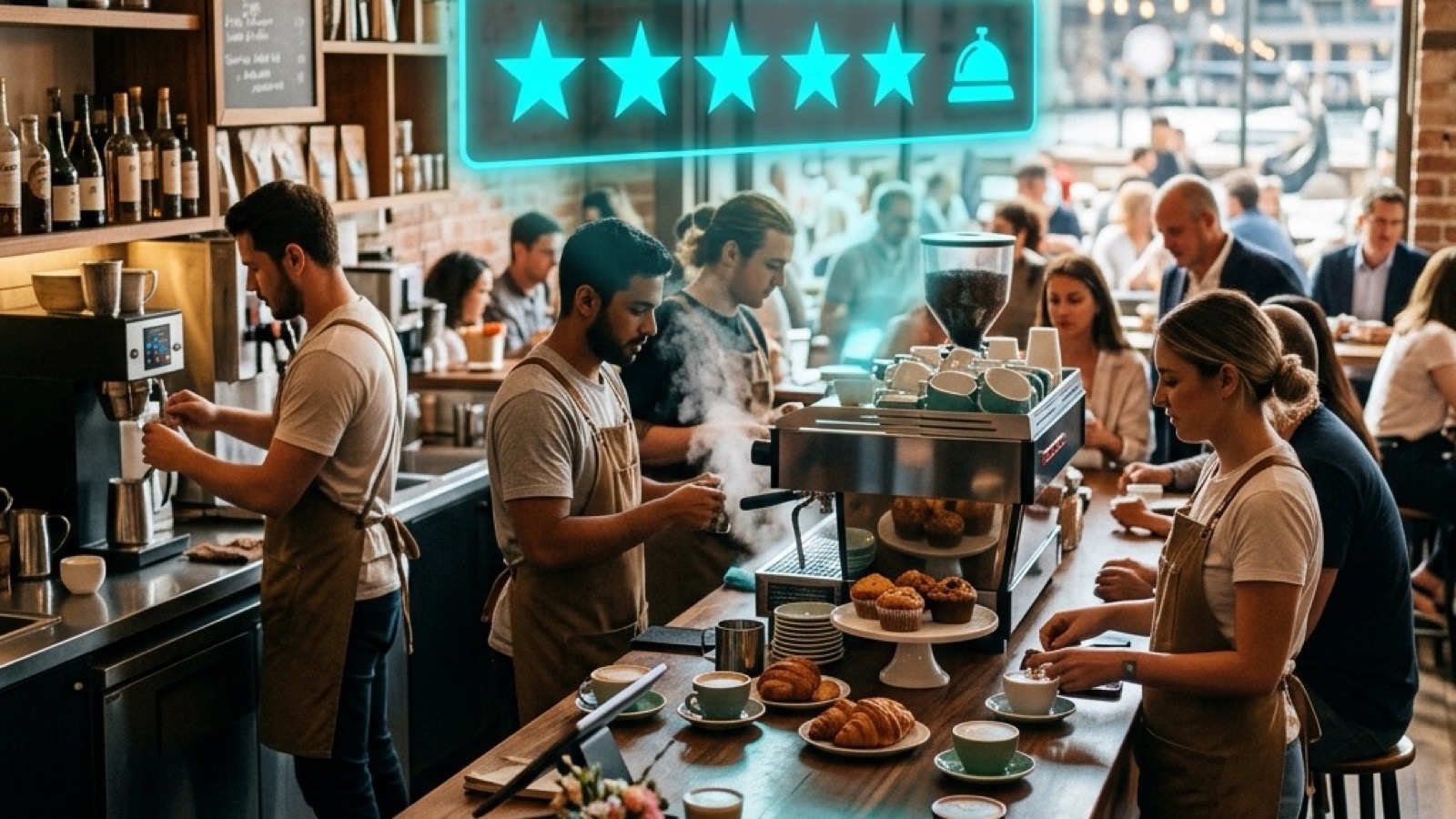
Sydney's hospitality scene is one of the most competitive in the world. Over 600 new restaurants, cafes, and bars opened across Greater Sydney in 2025 alone. Meanwhile, rising rents, ingredient costs, and staff shortages continue to squeeze margins for every venue from Manly to Parramatta. In this environment, marketing is not optional — it is the difference between a full house and an empty dining room.
This guide is written for busy restaurant owners, cafe operators, and bar managers who do not have time to wade through marketing jargon. It covers the channels that actually work for hospitality venues in Sydney, with realistic budgets and practical steps you can act on this week.
Google Business Profile: Your Most Important Marketing Asset
If you do one thing for your venue's marketing, make it this: fully optimise your Google Business Profile (GBP). When someone searches "restaurants near me" or "best cafe in Surry Hills," Google's local pack — the map with three listings — is the first thing they see. If your venue is not in that pack, you are invisible to the majority of potential customers.
Here is what a fully optimised GBP looks like for a Sydney restaurant:
- Complete and accurate information — name, address, phone number, opening hours (including public holiday hours), website link, and menu link. Every field filled in. No outdated hours that send people to a closed restaurant.
- Fresh photos every week — not stock images. Real photos of your dishes, your space, your team. Google prioritises listings with recent photo uploads. Venues that add new photos weekly get 42% more direction requests and 35% more website clicks than those that do not.
- Google Posts — these are short updates that appear directly on your listing. Post your weekly specials, upcoming events, new menu items, or seasonal offerings. Most restaurants ignore this feature entirely, which means it is a free advantage for those who use it.
- Correct categories — your primary category should be as specific as possible ("Thai Restaurant" not just "Restaurant"). Add secondary categories for related searches ("Takeaway Restaurant," "Catering Service").
- Q&A section — proactively add and answer common questions: "Do you have parking?", "Is there outdoor seating?", "Do you cater for large groups?" Do not let strangers answer these questions for you.
The Google Business Cheat
Most Sydney restaurants set up their Google Business Profile once and never touch it again. Simply updating your profile weekly — adding a photo, posting a special, responding to a review — puts you ahead of 80% of your local competition. It costs nothing and takes ten minutes.
Social Media That Actually Fills Tables
Social media for restaurants is not about follower counts. It is about making people hungry and creating enough FOMO that they book a table. Here is what works in 2026:
Short-form video is non-negotiable. Instagram Reels and TikTok are the primary discovery channels for restaurants among under-40 diners. A 15-second video of a pasta dish being plated, a cocktail being poured, or a dessert being torched will outperform any static photo. You do not need a videographer — a staff member with an iPhone and good lighting is enough.
Behind-the-scenes content builds connection. Show the 5am bread bake. Show the chef testing a new dish. Show the bar team prepping for Friday night. Customers want to feel connected to the people behind the food, not just the food itself.
User-generated content (UGC) is your best advertising. When customers tag your venue in their stories or posts, reshare it. Encourage it with a subtle sign ("Tag us @YourVenue for a chance to be featured"). UGC is more trusted than any content you create yourself because it comes from real customers, not a marketing department.
Stop posting stock photos. Nothing kills authenticity faster than a perfectly staged stock image of a coffee cup that was clearly not taken in your cafe. Every photo should be unmistakably yours. Imperfect and authentic beats polished and generic every single time in hospitality social media.
Reviews and Reputation: The Make-or-Break Factor
In Sydney's hospitality market, your online reputation is worth more than any advertising campaign. A venue with 4.5 stars and 200+ reviews will consistently outperform a venue spending $5,000 a month on ads but sitting at 3.8 stars.
How to get more reviews:
- QR codes on tables and receipts — link directly to your Google review page. Make it effortless. If someone has to search for your business on Google to leave a review, most will not bother.
- Ask at the right moment — after a compliment ("Thank you! We'd love it if you could share that on Google"), after a birthday celebration, or when a regular visits.
- Automated review requests — send an SMS or email 2 hours after a booking with a direct link to leave a review. This alone can double your monthly review volume.
How to handle negative reviews:
Respond to every negative review within 24 hours. Be professional, acknowledge the issue, and offer to make it right. Potential customers read your responses to negative reviews more carefully than the review itself. A thoughtful response to a one-star review can actually increase trust in your venue.
Never argue, never get defensive, and never offer excuses. A simple "We're sorry your experience didn't meet our standard. We'd love the chance to make it right — please reach out to us directly" goes further than a paragraph of justifications.
Email and SMS Marketing: Low Cost, High Return
Email and SMS are the most underused marketing channels in Sydney hospitality. Most venues collect customer data through their booking system but never use it. That is leaving money on the table — literally.
Birthday offers — if your booking system captures birthdays, send an automated email or SMS two weeks before with a special offer. Birthday dinners are high-spend, high-party-size bookings. A simple "Happy birthday from [Venue Name] — enjoy a complimentary dessert when you celebrate with us" can drive significant revenue.
Mid-week specials — most restaurants are busy Friday and Saturday but struggle Tuesday through Thursday. A targeted SMS blast on Monday morning advertising a Wednesday special can fill those quiet tables for pennies per message.
Seasonal and event campaigns — Mother's Day, Valentine's Day, long weekends, Vivid Sydney, NYE. Plan your email campaigns around these dates at least four weeks in advance. The venues that fill up for these events are the ones that market them early.
The SMS Advantage
SMS open rates for restaurants sit at over 90%, compared to roughly 20% for email. A well-timed text message to your customer database — sent at 11am on a Monday with a mid-week offer — will fill more tables than a week of social media posts. Keep messages short, include a booking link, and always provide an opt-out.
AI and Automation for Hospitality
Automation is no longer just for big chains with big budgets. In 2026, even a single-venue cafe can use AI tools to handle tasks that used to require dedicated staff time:
Voice AI for phone bookings. A voice AI receptionist answers every phone call, takes bookings in real time, handles menu questions, and sends confirmations — 24 hours a day. For restaurants that miss 30-40% of calls during service, this is the single biggest revenue recovery tool available.
Automated review requests. After every booking, an automated message goes out asking for a Google review. No staff effort required. Review volume increases steadily without anyone on your team having to remember to ask.
Chatbots on your website. A simple AI chatbot on your website can answer common questions (hours, parking, dietary options, group bookings) and capture contact details from potential customers — even when your team is asleep.
Automated social media scheduling. Batch-create content once a week and schedule it to post automatically. This ensures consistent posting even during your busiest weeks when marketing is the last thing on your mind.
SEO for Restaurants: Getting Found on Google
Beyond Google Business Profile, your website also needs to work for you in organic search results. Here are the essentials:
Target local keywords. Your website should rank for searches like "Italian restaurant Newtown," "best brunch Bondi," or "waterfront dining Manly." Each location and cuisine keyword combination is an opportunity to capture diners who are actively searching.
Make your menu crawlable. If your menu is a PDF or an image, Google cannot read it. Publish your menu as HTML text on your website so Google can index every dish, every ingredient, and every dietary label. This is one of the easiest SEO wins for restaurants and almost nobody does it.
Add schema markup. Restaurant schema tells Google your cuisine type, price range, opening hours, and location in a structured format. This can earn you rich snippets in search results — the enhanced listings that show stars, price range, and hours directly on the Google results page.
Realistic Marketing Budgets for Sydney Hospitality
Here is what to expect at different investment levels:
$500 to $2,000 per month — the essentials. Google Business Profile management, basic social media (3-4 posts per week), review management, and email marketing. This level suits a single-venue cafe or small restaurant that wants to maintain a solid online presence without heavy investment.
$2,000 to $5,000 per month — growth mode. Everything above plus paid advertising (Google Ads and Meta Ads), professional content creation (photo and video), SEO, automation tools (voice AI, chatbot, automated reviews), and detailed analytics. This level suits venues that want to actively grow their customer base and fill more tables during quiet periods.
The key is to start with the essentials and scale up as you see results. There is no point spending $4,000 a month on ads if your Google Business Profile has outdated hours and no photos.
Budget Priority Order
If you can only invest in three things, invest in these — in this order: 1) Google Business Profile optimisation, 2) Review generation, 3) Short-form video content. These three deliver the highest return per dollar for any Sydney hospitality venue.
Frequently Asked Questions
How much should a Sydney restaurant spend on marketing?
Most Sydney restaurants should allocate between $500 and $2,000 per month for essential marketing (Google Business Profile management, basic social media, and review management). Venues looking to grow aggressively should budget $2,000 to $5,000 per month to add paid advertising, professional content creation, SEO, and automation tools.
What is the most important marketing channel for restaurants?
Google Business Profile is the single most important marketing asset for any Sydney restaurant. It drives local search visibility, displays your reviews, shows your menu and photos, and is often the first thing potential customers see. A fully optimised Google Business Profile with regular posts, fresh photos, and strong reviews will outperform almost any other marketing channel for local restaurants.
How can restaurants get more Google reviews?
The most effective method is placing QR codes on tables, receipts, or thank-you cards that link directly to your Google review page. Ask at the right moment — after a compliment, after a birthday celebration, or when a regular visits. Automated review request systems that send an SMS or email after a booking can also significantly increase review volume without requiring staff effort.
Is social media worth it for restaurants and cafes?
Yes, but only if done well. Restaurants that post authentic behind-the-scenes content, short-form video (Reels and TikToks), and user-generated content consistently outperform those posting polished stock imagery. Social media for hospitality should focus on making people hungry and creating FOMO — not on follower counts.
Ready to Fill More Tables?
Marketing a restaurant in Sydney does not have to be complicated or expensive. It starts with the basics — an optimised Google profile, strong reviews, and authentic content — and scales from there.
K&G Marketing Media works with Sydney restaurants, cafes, and bars to build marketing systems that fill tables without consuming your time. From social media and local SEO to voice AI receptionists and automated review generation, we handle the marketing so you can focus on the food and the experience.
We will call you back within 30 seconds
Or email us at hello@kgmarketingmedia.com to discuss your venue.